W²WER²L
HomeLab GoalHighlightsTeamWorksGuidelinesAbout
Contact
HomeLab GoalHighlightsTeamWorksGuidelinesAboutContact
W²WER²L

A university research laboratory dedicated to advancing civil engineering through cutting-edge research in structural, geotechnical, transportation, hydraulic, and materials engineering.

Explore

HomeLab GoalHighlightsTeamWorksGuidelinesAbout

Research

HydraulicsFlood ResilienceDigital TwinsSustainable Materials

Contact

lab@university.eduTel: 051-200-5738LinkedIn
© 2026 WER²L. All rights reserved.Civil & Environmental Engineering Laboratory
    Back to Works
    Beyond Dissolved Oxygen: Integrated Assessment of Multistage Vortex Aeration Effects on Urban Reservoir Water Quality
    Paper
    Published
    Featured

    Beyond Dissolved Oxygen: Integrated Assessment of Multistage Vortex Aeration Effects on Urban Reservoir Water Quality

    August 28, 20260
    Download PDF

    Authors

    EJ
    Eraliev Javokhirbek
    First Author
    JM
    Javokhirbek Mamatkobulov
    Co-Author
    DG
    Dr.Arnab Ghosh
    Co-Author
    DP
    Dr.Tanushree Paul
    Co-Author
    SP
    Sunghyuk Park
    Corresponding

    Abstract

    Aeration is widely used to increase the oxygen concentration in urban reservoirs, but its broader effect on nutrients, organic matter, and integrated water quality status remains uncertain. This study evaluated the response of the Jangrim reservoir, Busan, Republic of Korea, to a multistage vortex aerator (MVA) using monthly monitoring data from the Water Environment Information System by the Ministry of Environment from 2020 to 2025. The dataset was divided into pre-MVA and post-MVA periods, and water quality changes were assessed using descriptive statistics, box plots, percentage change, time-series regression, Pearson’s correlation analysis, principal component analysis, and three water quality indices: CCME-WQI, RT-WQI, and NSF-WQI. After MVA installation, dissolved oxygen increased from 8.7 mg/L, corresponding to a 72.4% increase. TN and TP decreased by 41.2% and 59.6%, respectively. In contrast, organic matter indicators showed mixed responses: BOD decreased by 18.8%, whereas COD and TOC increased by 4.6% and 13.2%, respectively. WQI scores improved after MVA operation, but CCME-WQI remained in the Poor class. PCA showed that urban pond system water quality was controlled by oxygen-related, nutrient, and organic–particulate factors. Overall, MVA improved oxygen conditions and partially reduced nutrient pressure, but aeration alone was insufficient for full urban pond system restoration.
    Related Works

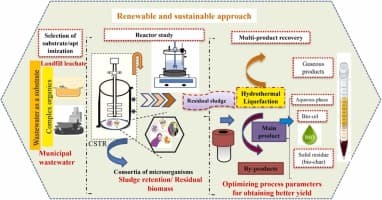
    Biochar-assisted aerobic granulation in enhanced biological treatment of landfill leachate with municipal wastewater for sustainable resource recovery: A biorefinery approach
    Paper2025

    Biochar-assisted aerobic granulation in enhanced biological treatment of landfill leachate with municipal wastewater for sustainable resource recovery: A biorefinery approach

    View work 0
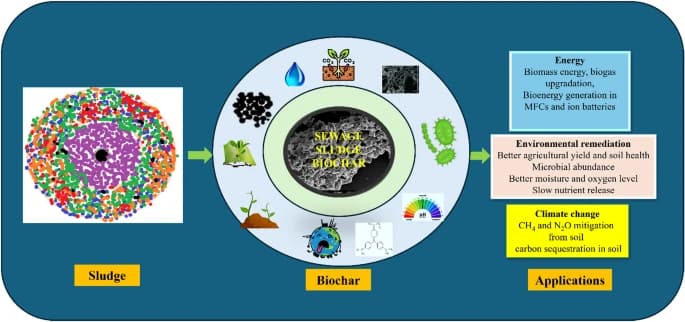
    Aerobic Granular Sludge as a Resource for Sludge-Based Biorefineries: Advances, Challenges, and Circular Economy Potential
    Paper2026

    Aerobic Granular Sludge as a Resource for Sludge-Based Biorefineries: Advances, Challenges, and Circular Economy Potential

    View work 0
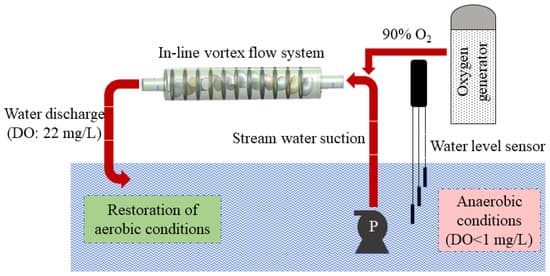
    Stream Water Quality Control and Odor Reduction through a Multistage Vortex Aerator: A Novel In Situ Remediation Technology
    Paper2023

    Stream Water Quality Control and Odor Reduction through a Multistage Vortex Aerator: A Novel In Situ Remediation Technology

    View work 0
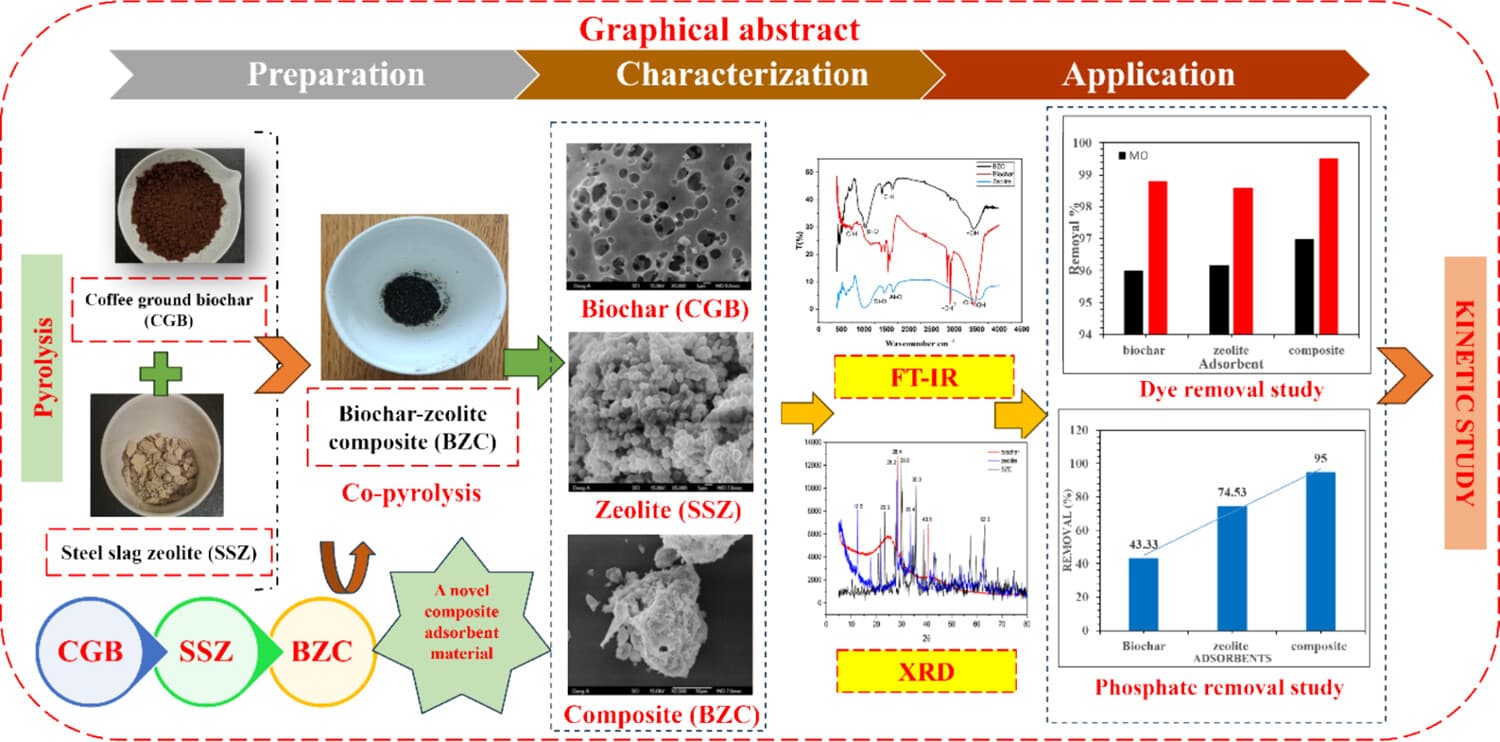
    Synthesis of novel composite material with spent coffee ground biochar and steel slag zeolite for enhanced dye and phosphate removal
    Paper2024

    Synthesis of novel composite material with spent coffee ground biochar and steel slag zeolite for enhanced dye and phosphate removal

    View work 0