Paper2025
Biochar-assisted aerobic granulation in enhanced biological treatment of landfill leachate with municipal wastewater for sustainable resource recovery: A biorefinery approach
View work 0
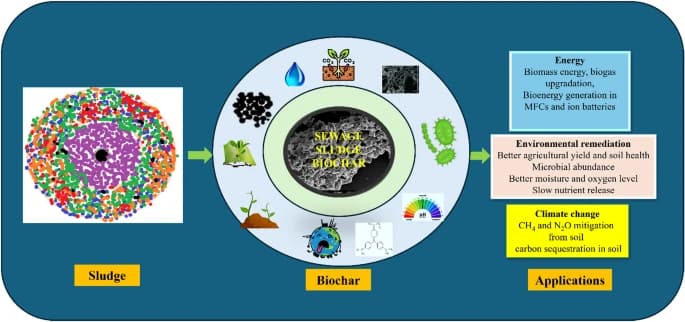
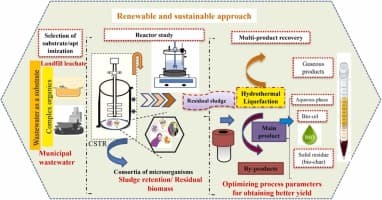
Biological wastewater treatment technologies following sustainable techniques is extensively moving towards resource recovery and circular economy approaches. Aerobic granular sludge (AGS) technologies are widely used in this research area, owing to their enhanced potential in terms of nutrient removal, settling properties, microbial diversity, and resistance to shock loading. However, slow granulation and rapid post-formation disintegration remain major challenges limiting the large-scale application of AGS technology. This review summarizes the fundamental mechanisms of granulation, morphological characteristics, and key factors influencing granule stability. It further highlights the growing importance of sewage sludge valorization for recovering energy and value-added products within a circular economy framework. Furthermore, widely incorporated resource recovery pathway and biorefinery-based approaches are critically discussed. Special emphasis is given to sludge-based biorefineries as integrated platforms for simultaneous waste treatment and resource recovery. Overall, this review provides a comprehensive overview of current developments and future directions in AGS-based sludge valorization approaches toward establishing a sustainable and economically viable circular bioeconomy.