Paper2025
Biochar-assisted aerobic granulation in enhanced biological treatment of landfill leachate with municipal wastewater for sustainable resource recovery: A biorefinery approach
View work 0
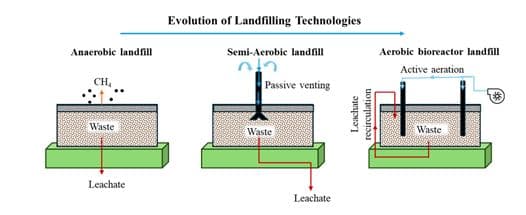
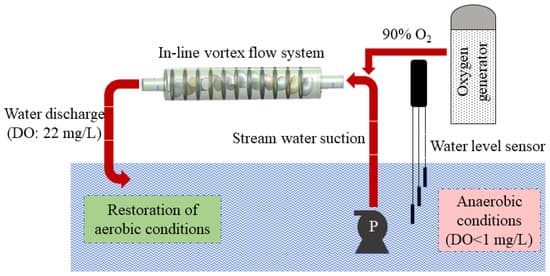
Aerobic bioreactor landfills (ABRLs) offer promise for rapid waste stabilization, superior leachate quality, and substantial methane mitigation; however, a holistic synthesis of their diverse aeration strategies and emerging innovations remains lacking. This review critically evaluates ABRL operational principles, configurations, and performance metrics and quantifies outcomes reported in laboratory, pilot and field lysimeter experiments. Across the studies compiled, leachate chemical oxygen demand (COD) reductions ranged from roughly 50 % to >99 %, with the majority of experiments reporting ≥85 % COD removal under aerobic/recirculation regimes. Waste settlement measured in these trials varied from ∼25 % to 62.5 %. Experiment durations for lab/pilot lysimeters most commonly fell between ∼80 and 600 days, while larger-scale/longer-term projects reported multi-year observational windows and continued stabilization trends. Besides, fundamental mechanisms of aerobic degradation are outlined, with a comparison of horizontal versus vertical aeration and leachate-based oxygen delivery systems. The influence of aeration on key performance indicators ammonia-nitrogen removal, chemical oxygen demand reduction, waste settlement, and off-gas composition is examined in detail. Advanced leachate recirculation techniques, including micro-aeration, pure-oxygen oxygenation, and H2O2 pretreatment, are explored to highlight their roles in enhancing microbial activity and accelerating stabilization. Technical challenges like oxygen-distribution heterogeneity, moisture management, and high energy demands are subsequently identified, and monitoring and design strategies are proposed to overcome these barriers. By synthesizing global case studies and quantitative performance data, this review addresses a critical gap in the literature and provides actionable insights to guide researchers and practitioners toward more sustainable landfill-management practices that align with climate-mitigation goals.