W²WER²L
HomeLab GoalHighlightsTeamWorksGuidelinesAbout
Contact
HomeLab GoalHighlightsTeamWorksGuidelinesAboutContact
W²WER²L

A university research laboratory dedicated to advancing civil engineering through cutting-edge research in structural, geotechnical, transportation, hydraulic, and materials engineering.

Explore

HomeLab GoalHighlightsTeamWorksGuidelinesAbout

Research

HydraulicsFlood ResilienceDigital TwinsSustainable Materials

Contact

lab@university.eduTel: 051-200-5738LinkedIn
© 2026 WER²L. All rights reserved.Civil & Environmental Engineering Laboratory
    Back to Works
    Oxygenated Leachate Recirculation for Enhanced MSW Stabilization and Landfill Space Reclamation: Lab-Scale Bioreactor Insights
    Paper
    Published

    Oxygenated Leachate Recirculation for Enhanced MSW Stabilization and Landfill Space Reclamation: Lab-Scale Bioreactor Insights

    January 30, 20250
    Download PDF

    Authors

    DG
    Dr.Arnab Ghosh
    First Author
    DP
    Dr.Tanushree Paul
    Co-Author
    SP
    Sunghyuk Park
    Corresponding

    Abstract

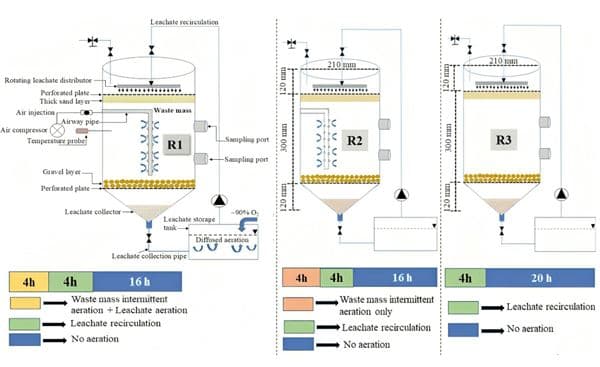
    This study investigates aerobic landfill stabilization using three bioreactors with different operational modes: R1 with oxygenated (~ 90% pure oxygen) leachate recirculation and waste mass aeration, R2 with conventional leachate recirculation (without oxygenation) and waste mass aeration, and R3 as an anaerobic control. The waste stabilization was assessed by reductions in COD, ammonia nitrogen, NOx (nitrate and nitrite nitrogen), and total phosphorus removal, as well as reductions in volatile solids and subsidence of waste height. Among the three reactors, R1 exhibited the best performance, with ~ 85% COD removal efficiency likely due to the high DO content during leachate recirculation. Additionally, R1 achieved ~ 99% removal efficiency of ammonia nitrogen through rapid aerobic nitrification. An exponential attenuation model was applied to describe the degradation of organic substances, with degradation rates of COD and NH3-N increasing from 0.005 and 0.007 d⁻1 to 0.01 and 0.021 d⁻1, respectively, when leachate recirculation and oxygenation were applied. Reactor R1 could meet the COD emission limit of 150 mg/L, as specified by WHO surface water regulations, by day 478, while reactors R2 and R3 are expected to achieve this level by days 567 and 742, respectively. The results indicated that the aerobic conditions in R1, supplemented with pure oxygen (~ 90%) aeration, elicited rapid stabilization of the simulated landfill waste, reflected by a high waste settlement of ~ 63.5%. The findings suggest that this strategy can improve landfill stabilization in practice, optimize landfill space reuse, and enhance MSW management by reducing the load on existing leachate treatment facilities.

    Related Works

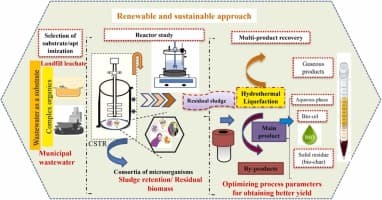
    Biochar-assisted aerobic granulation in enhanced biological treatment of landfill leachate with municipal wastewater for sustainable resource recovery: A biorefinery approach
    Paper2025

    Biochar-assisted aerobic granulation in enhanced biological treatment of landfill leachate with municipal wastewater for sustainable resource recovery: A biorefinery approach

    View work 0
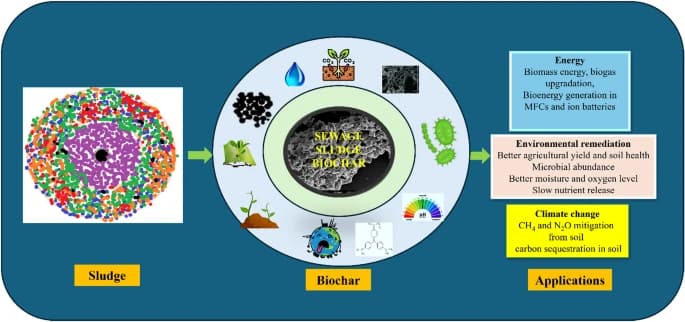
    Aerobic Granular Sludge as a Resource for Sludge-Based Biorefineries: Advances, Challenges, and Circular Economy Potential
    Paper2026

    Aerobic Granular Sludge as a Resource for Sludge-Based Biorefineries: Advances, Challenges, and Circular Economy Potential

    View work 0
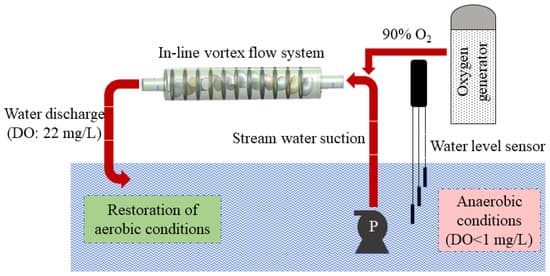
    Stream Water Quality Control and Odor Reduction through a Multistage Vortex Aerator: A Novel In Situ Remediation Technology
    Paper2023

    Stream Water Quality Control and Odor Reduction through a Multistage Vortex Aerator: A Novel In Situ Remediation Technology

    View work 0
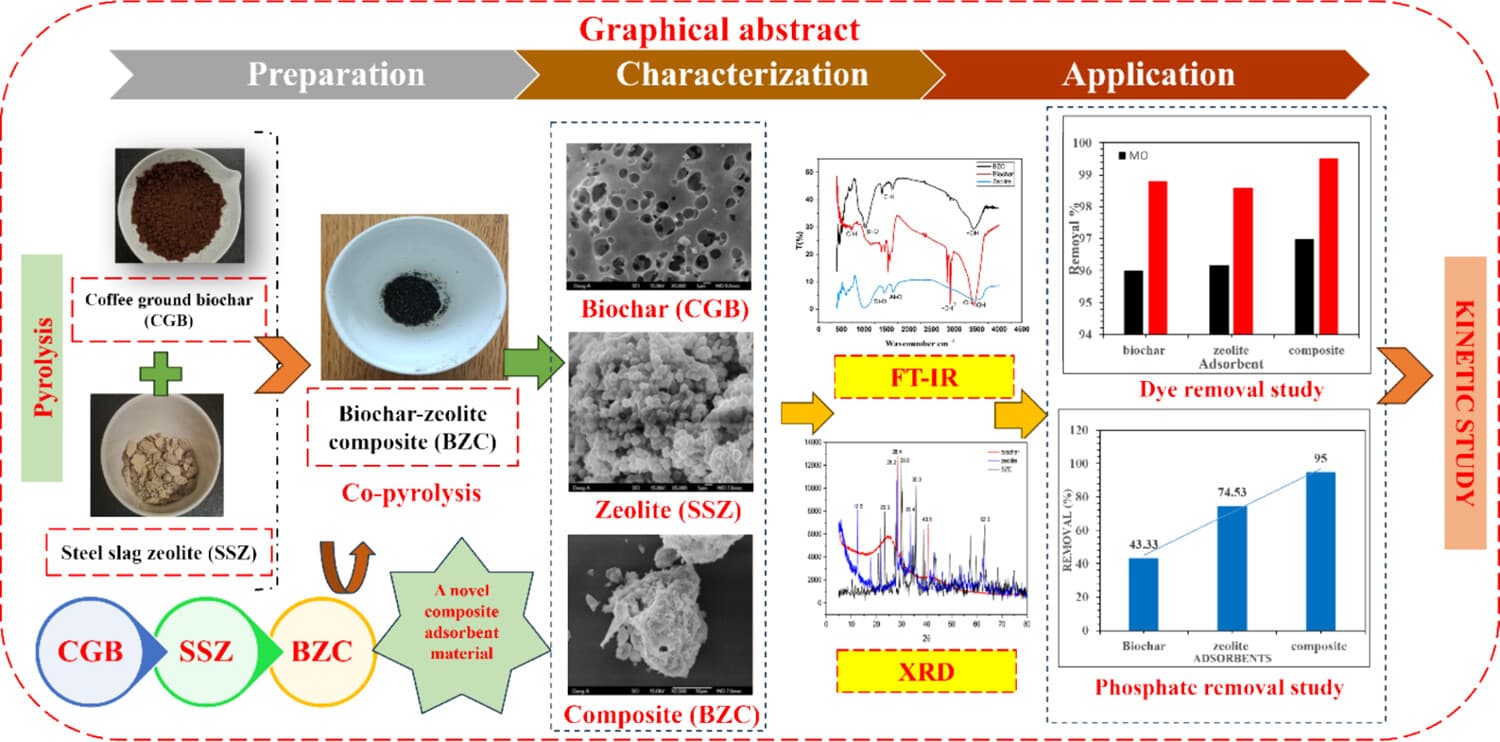
    Synthesis of novel composite material with spent coffee ground biochar and steel slag zeolite for enhanced dye and phosphate removal
    Paper2024

    Synthesis of novel composite material with spent coffee ground biochar and steel slag zeolite for enhanced dye and phosphate removal

    View work 0